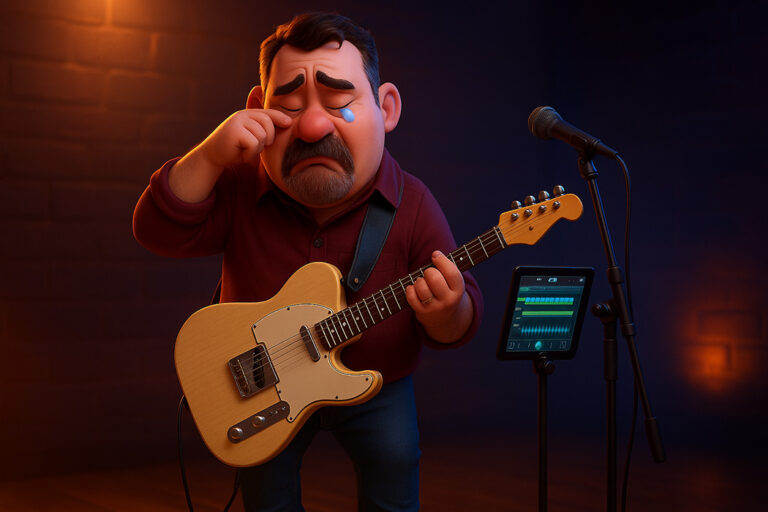
Every now and then I see a comment along the lines of, “If I walk into a bar and hear a solo act that sounds like a full band, I walk straight back out.” To me, that kind of attitude says more about your ego than it does about music.
I play bass and sing in a four piece band, I perform duo gigs, I do acoustic solo shows with just an acoustic guitar and stomp, and I also play electric guitar and sing with backing tracks. Same brain, same hands, same years of practice. So the real question is not “Are backing tracks cheating?” …. It is “Am I using every tool I can so I can do music for a living and pay the bills?”. Each to their own, but here is where I stand.
What Critics Say About Backing Tracks
There is a very real debate about backing tracks in live music. Critics argue that using prerecorded parts can “compromise the authenticity” of a live show and reduce spontaneity.
Some fans and musicians dislike tracks because they feel it takes away from the honesty of a performance, especially when big chunks of the band are on the laptop rather than on the stage.
Others claim that solo acts using tracks are “paid karaoke” or that tracks are stealing work from other musicians who could be hired to play those parts.
Those are real concerns, and I get where they come from. If everything is mimed and nothing you see onstage is actually being played, that is not a live show, that is a pantomime with a PA.
But that is not the same thing as a working musician using tracks as one part of their toolkit.
What Backing Tracks Actually Do For A Show
Used well, tracks are not a shortcut, they are an extension of what you can deliver.
Backing tracks can:
- Help a solo or small act recreate arrangements that would normally need extra players, like strings, keys, percussion or layered harmonies.
- Give the audience a sound that is closer to the studio version they know, which a lot of listeners actually prefer.
- Cover missing band members on nights when budgets, travel or life make it impossible to put a full lineup on stage.
- Keep the tempo tight and consistent, which is important for dance floors, programmed lighting and synced visuals.
Versatility Is Not “Cheating”
In a typical month I may:
- Stand at the back on bass, locking in with the drummer.
- Sing harmonies in a duo either acoustically or with tracks.
- Strip everything back to just an acoustic guitar, stomp box and voice.
- Plug in an electric and use tracks to fill out drums, bass and keys for a high energy solo night.
Which version of me is the “real” musician? The answer is all of them.
A big part of being a working muso in 2025 is adapting. Different venues have different budgets, sound limits and expectations. Some want a chilled acoustic vibe. Some need a full band feel but can only afford one or two people. If I can walk into each of those situations and deliver a professional show that keeps the crowd and venue happy, that is not cheating, that is doing my job. The gear I use changes. The musicianship does not.
The Myth Of “Pure” Live Music
There is also a bit of selective memory when people talk about “pure” live shows.
Popular music has used technology for decades. Overdubs, layered vocals, extra guitars, strings and synths are standard on records. Most of that cannot physically be recreated by the exact same number of people on stage without some help.
Big acts often use extra players offstage or run click and tracks for certain parts so that the show still sounds like the album the audience paid to hear.
If it is acceptable for a stadium act to use those tools, then a solo muso in a corner of a pub should not be crucified for running some drums and keys from a laptop.
Where It Can Go Wrong
There are, however, ways to use tracks that do cross a line for me (and I have seen all of these over the years!):
- If no one on stage is actually playing or singing, and everything is mimed, that is false advertising.
- If the backing track contains vocals and the singer is barely doing anything on top, that is karaoke.
- If you are pretending to play an instrument that is not plugged in while a track does the work, that is not about serving the audience, that is about pretending.
The line for me is honesty. The audience should hear you working. Tracks should support that, not hide it.
Why I Defend Musicians Who Use Tracks
So when someone says, “If a solo performer sounds like a whole band, I walk out,” this is what I hear underneath it.
I hear someone clinging to a very narrow definition of what they believe “real” musicianship looks like, without any interest in the context, the skill involved, or the reality of working as a professional musician. I hear judgement without curiosity, and opinion without critical thinking.
It comes across as an elitist attitude, one that dismisses effort, versatility, and intent in favour of an outdated rulebook that only exists in their own head. Rather than asking why an artist might be using certain tools, they choose to judge from a distance and walk away feeling superior about it.
You are absolutely entitled to like what you like. But writing off a performer without understanding the facts, the skill required, or the realities of modern gigging is not about musical integrity, it is about arrogance.
Music is about connection, not passing purity tests.
Final Thoughts
If you are a musician thinking about using backing tracks, my view is simple:
- Be honest about what is live and what is not.
- Keep the focus on your playing and singing, not on pressing play.
- Use tracks to enhance your show, not to pretend you can do something you cannot.
- Remember that versatility is a strength, not something to be ashamed of.
I will keep playing in bands, performing unplugged, and doing tracked solo shows when the gig calls for it. It is all part of the same thing for me: getting out there, making music, connecting with people and paying the bills by doing what I love.
If someone wants to walk out because I made one guitar and one voice sound like a full band, that is their choice. I will keep playing for the people who stay.